Understanding the Biological Resilience of Desert Flora
The desert is often perceived as a barren wasteland, yet it hosts some of the most specialized and resilient life forms on the planet. Desert plants, or xerophytes, have evolved sophisticated physiological and morphological adaptations to survive extreme heat, high UV radiation, and chronic water scarcity. These adaptations are not merely survival tactics; they are complex biological strategies that allow for the creation of entire ecosystems in environments where most life would perish.
Water Acquisition and Storage Mechanisms
In arid regions, the primary constraint is the availability of water. Desert plants have developed two main strategies for water management: deep-taproot systems and succulent storage. Plants like the Desert Poplar (Populus euphratica) can extend their roots dozens of meters into the earth to reach the underground water table, ensuring a steady supply even during multi-year droughts. Conversely, species like the Desert Rose utilize a thickened stem, known as a caudex, to store moisture for long-term use.
Thermal Regulation and Leaf Modification
To prevent excessive transpiration, many desert plants have modified their leaves into spines or developed thick, waxy cuticles. These structures reflect sunlight and create a boundary layer of air that reduces moisture loss. Additionally, some plants employ Crassulacean Acid Metabolism (CAM) photosynthesis, allowing them to open their stomata at night when temperatures are lower, drastically increasing their water-use efficiency.

The Date Palm: The ‘Tree of Life’ in the Arid Oasis
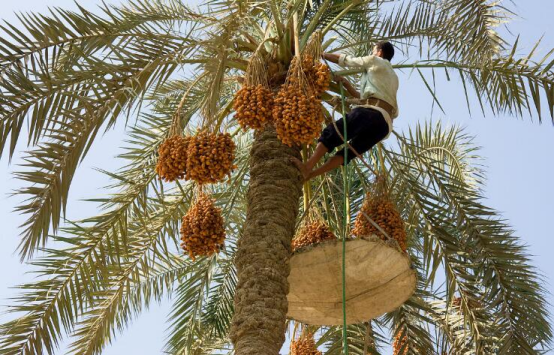
The Date Palm (Phoenix dactylifera) stands as the quintessential symbol of desert survival and human civilization in arid regions. Known as the “Tree of Life,” it provides food, shelter, and economic stability to millions of people across the Middle East, North Africa, and beyond. Its ability to thrive in high-salinity soils and extreme heat makes it a cornerstone of oasis agriculture.
Ecological Role and Microclimate Creation
In an oasis, the Date Palm acts as a “biological umbrella.” Its tall canopy provides essential shade for lower-level crops, such as vegetables and fruit trees, which would otherwise be scorched by the desert sun. This tiered agricultural system reduces evaporation rates and creates a humid microclimate, allowing for a level of biodiversity that is impossible in the surrounding open desert.
Nutritional and Economic Significance
Dates are a nutrient-dense fruit, rich in natural sugars, fiber, potassium, and essential vitamins. For centuries, they have served as a primary caloric source for desert-dwelling populations. Beyond the fruit, every part of the tree is utilized:
- Trunks: Used as timber for building structures and irrigation channels.
- Fronds: Woven into mats, baskets, and roofing materials.
- Seeds: Ground into animal feed or processed for oil.

Desert Viticulture: Cultivating Grapes in Arid Climates
While grapes are often associated with Mediterranean or temperate climates, desert viticulture has emerged as a high-value agricultural sector. The combination of intense sunlight and controlled irrigation produces grapes with exceptional sugar content and unique flavor profiles, making them highly sought after for both fresh consumption and wine production.
The Synergy of Sunlight and Controlled Water
In desert environments, the abundance of sunlight accelerates photosynthesis, leading to rapid fruit development. However, this must be balanced with precision irrigation. Modern drip irrigation systems deliver water directly to the root zone, minimizing waste and preventing the fungal diseases often associated with high humidity. This “magical combination” allows growers to manipulate the growth cycle of the vines with extreme precision.
Managing Diurnal Temperature Variations
One of the hidden advantages of the desert is the significant temperature drop at night. This diurnal variation helps the grapevines rest and preserves acidity in the fruit, which is crucial for high-quality wine. The stress of the desert environment also encourages the vines to produce secondary metabolites, such as antioxidants, which contribute to the health benefits and aromatic complexity of the grapes.

Bupleurum chinense: The Medicinal Powerhouse of the Sands
Bupleurum chinense, commonly known as Chaihu, is a stress-resistant plant that holds a prominent place in Traditional Chinese Medicine (TCM). Its ability to grow in poor, sandy soils where other medicinal herbs fail makes it a vital resource for both ecology and pharmacology.
Pharmacological Properties and Benefits
The roots of Bupleurum chinense contain saikosaponins, which are bioactive compounds known for their anti-inflammatory, antiviral, and hepatoprotective (liver-protecting) effects. In TCM, it is frequently used to treat fevers, influenza, and liver stagnation. The plant’s resilience in the wild ensures that it accumulates these potent compounds even under environmental stress.
Adaptation to Arid Soil Conditions
Bupleurum chinense has a highly developed root system that allows it to anchor in loose, sandy terrain. This not only aids in the plant’s survival but also contributes to soil stabilization. It is often used in ecological restoration projects to prevent soil erosion while simultaneously providing a sustainable source of medicinal raw materials for the pharmaceutical industry.

The Desert Poplar: A Living Fortress Against Sand Encroachment
The Desert Poplar (Populus euphratica) is often called the “Guardian of the Desert.” These ancient trees are among the few broad-leaved species capable of surviving in the heart of the world’s most arid regions, such as the Taklamakan Desert. They are famous for their “three lives”: living for a thousand years, standing for a thousand years after death, and remaining undecayed for a thousand years after falling.
Salt Tolerance and Water Management
The Desert Poplar has an extraordinary capacity to handle salinity. It can excrete excess salt through its leaves, a process visible as white crystals on the foliage. Its roots are capable of detecting moisture from great distances, allowing the tree to survive in areas where the water table is deep and fluctuating. This makes it an essential species for windbreaks and sand fixation.
Biodiversity and Habitat Support
Poplar forests, or “Tugay” forests, are critical hotspots for desert biodiversity. They provide nesting sites for migratory birds and shelter for desert mammals like the wild camel. By breaking the wind and stabilizing the soil, these forests prevent the encroachment of moving sand dunes onto agricultural land and human settlements.

The Desert Rose: Resilience Met with Aesthetic Brilliance
Adenium obesum, or the Desert Rose, is a succulent shrub that proves beauty can flourish in the most hostile conditions. Native to the arid regions of Africa and the Arabian Peninsula, it is prized both as a wild survivor and a popular ornamental plant worldwide.
Succulent Architecture and Survival
The most striking feature of the Desert Rose is its pachycaul stem—a thick, swollen base (caudex) that serves as a water reservoir. This allows the plant to survive months of total drought. Its leaves are thick and leathery, designed to minimize moisture loss, while its vibrant, trumpet-shaped flowers attract pollinators even in sparse environments.
Natural Defense Mechanisms
To protect its stored water from thirsty animals, the Desert Rose has evolved a toxic sap containing cardiac glycosides. This chemical defense is so potent that it has historically been used by indigenous tribes to coat arrow tips for hunting. This combination of physical storage and chemical protection makes the Desert Rose an apex survivor among desert flora.

Seabuckthorn: The Ecological Pioneer of Sand Stabilization
Seabuckthorn (Hippophae rhamnoides) is a pioneer species that plays a transformative role in desert ecology. Known for its bright orange berries and thorny branches, it is one of the most effective plants for combating desertification and improving soil quality.
Nitrogen Fixation and Soil Enrichment
One of Seabuckthorn’s most significant ecological contributions is its symbiotic relationship with Frankia bacteria, which allows it to fix atmospheric nitrogen in the soil. This process enriches the nutrient-poor desert sands, paving the way for other plant species to colonize the area. It essentially acts as a “soil builder,” turning barren ground into fertile land.
Wind Prevention and Sand Fixation
Seabuckthorn grows in dense, thorny thickets that act as powerful windbreaks. Its extensive, horizontal root system binds the sand together, preventing it from being blown away by desert storms. This makes it a primary choice for “Green Great Wall” projects aimed at stopping the expansion of deserts into habitable zones.
| Feature | Desert Poplar (Populus euphratica) | Seabuckthorn (Hippophae rhamnoides) |
|---|---|---|
| Primary Function | Windbreak & Water Table Guardian | Nitrogen Fixation & Sand Fixation |
| Root System | Deep Vertical Taproots | Extensive Horizontal Rhizomes |
| Economic Value | Timber & Tourism | Nutraceuticals & Superfoods |
| Soil Impact | Salt Accumulation Regulation | Nitrogen Enrichment |

Sustainable Management and Future Strategies for Desert Plants
As climate change accelerates desertification globally, the management and cultivation of resilient desert plants have become more critical than ever. Sustainable strategies must balance the extraction of economic resources with the preservation of fragile arid ecosystems.
Modern Technology in Arid Agriculture
The integration of IoT (Internet of Things) sensors and satellite imagery allows for “smart irrigation” in desert farms. By monitoring soil moisture levels in real-time, farmers can provide the exact amount of water needed by Date Palms or Grapes, drastically reducing the depletion of fossil aquifers. Furthermore, genetic research into the stress-resistant genes of species like Bupleurum chinense could lead to more resilient crop varieties for the future.
Reforestation and Carbon Sequestration
Desert reforestation projects using Poplars and Seabuckthorn are not only about stopping sand; they are also powerful tools for carbon sequestration. Despite the slow growth rates in arid zones, the vast scale of potential planting areas means that desert greening can contribute significantly to global climate goals.
Frequently Asked Questions (FAQ)
- Q1: How do desert plants survive without regular rainfall?
- Desert plants utilize three main strategies: drought avoidance (completing their life cycle quickly after rain), drought tolerance (using specialized tissues like a succulent caudex to store water), and deep-water acquisition (using taproots to reach underground aquifers).
- Q2: Why is the Date Palm called the “Tree of Life”?
- It is called the “Tree of Life” because every part of the plant is useful. It provides high-calorie food, shade for other crops, building materials from its trunk, and weaving materials from its leaves, making human life possible in extreme desert environments.
- Q3: Can grapes grown in the desert be used for high-quality wine?
- Yes. Desert grapes often have higher sugar concentrations due to intense sunlight and unique aromatic profiles caused by diurnal temperature swings (hot days and cold nights), which are highly prized by winemakers.
- Q4: What role does Seabuckthorn play in preventing desertification?
- Seabuckthorn is a pioneer species that fixes nitrogen in the soil, improving fertility. Its dense root network binds loose sand, preventing wind erosion and creating a stable environment for other plants to grow.
- Q5: Is the sap of the Desert Rose dangerous?
- Yes, the sap of the Desert Rose contains cardiac glycosides, which are toxic if ingested or if they enter the bloodstream. This serves as a natural defense mechanism against herbivores in the wild.

Related Posts