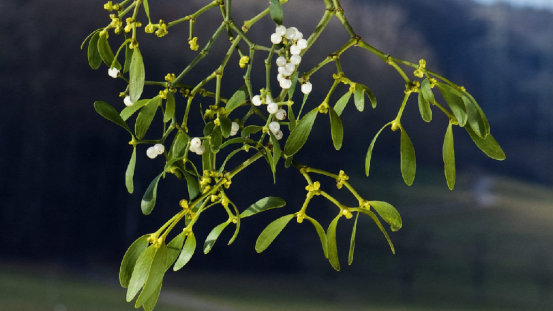
Mistletoe, this mysterious and contradictory plant, always grows quietly without our noticing. In temperate and subtropical forests, it lives on tall trees in a semi-parasitic way, like a shadow wandering in silence. It is not completely dependent on the host, but is both a parasite and self-sufficient under certain conditions. So, is this seemingly impossible coexistence a miracle of nature or a hidden threat?
Growth environment and ecological role: “green parasite” in temperate zones
In temperate forests, mistletoe exists in a silent manner. It lives on the branches of large trees such as oak, maple, and poplar, relying on the water and nutrients transported by the xylem, and seems to be the “little character” in the forest that is not paid attention to. But its growth is not without purpose. It is this special way of relying on the host that makes mistletoe play an extremely complex role in the ecosystem. It is the habitat and food source of countless birds and insects, but is it also quietly affecting the health of the forest?
Have you ever wondered whether mistletoe is a helper or a potential destroyer in the ecological balance of temperate regions? Not only can it rely on sunlight for photosynthesis and be partially self-sufficient, but it can also obtain water and minerals from host trees. However, if it grows luxuriantly, will it consume too many resources and eventually cause the host tree to wither?
When mistletoe occupies too many branches and leaves, the growth of the host tree will be greatly restricted. It may even cause these once vibrant trees to gradually fall into trouble. At this point, the “green war” in the forest becomes more and more confusing.
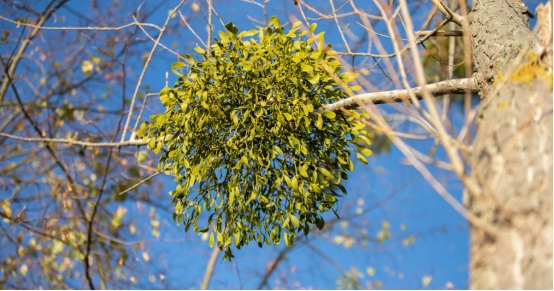
Parasitism and ecological impact: a delicate balance between life and death
The survival method of mistletoe is somewhat special. It is not a “parasite” that completely depends on the host. It is self-sufficient through its own photosynthesis and maintains a part of its vitality. However, as time goes by, its dependence on the host gradually deepens. When mistletoe spreads rapidly and covers the entire canopy, can the host tree still withstand this silent oppression?
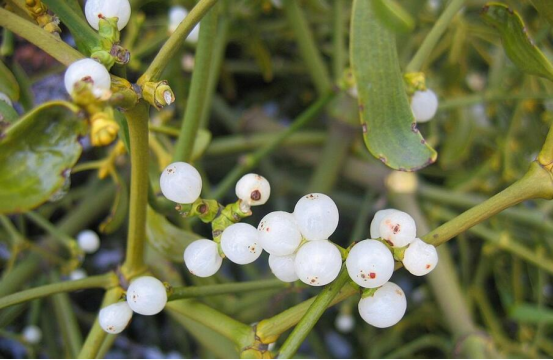
Deep in the forest, mistletoe seeds are spread through bird droppings, and with the help of the sticky juice on the fruit, they easily attach to new trees and begin to take root and sprout. Its spread method makes people wonder: Is nature also engaged in a “life and death competition”? Will mistletoe always silently overwhelm those fragile hosts and ultimately control the ecological pattern?
This seemingly natural ecological cycle is actually full of uncertainty. The spread of mistletoe is alarming. Its branches, leaves and fruits are like invisible nets that quietly surround the trees in the forest one by one. In this net, the growth, reproduction and even life of the host trees are greatly challenged.
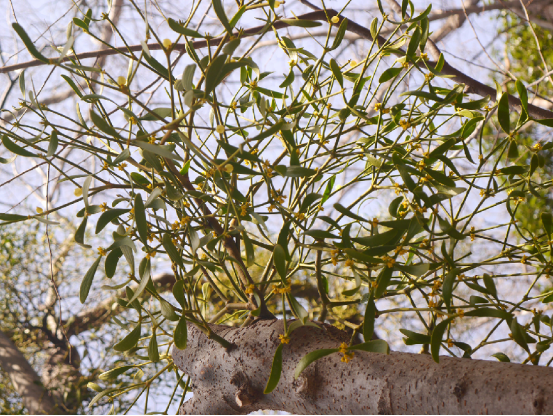
Culture and Symbolism: Mysterious Visitors in the Temperate Winter
However, in temperate cultures, mistletoe plays a very different role. In winter, it is an important part of holiday decorations, hung on doorways or tree branches to bring good luck and blessings. Have you ever wondered how the evergreen branches of mistletoe became a symbol of warmth and hope during the cold winter months?
Every Christmas, when the mistletoe branches sway at the doorstep, it is not only a decoration, but also carries the meaning of love and happiness. Remember the old legend? “Kissing under the mistletoe” has become a romantic way to convey emotions. How can such a warm symbol not make people yearn for it?
Could it be that this plant can be like a quiet guardian in the cold winter, giving people deep comfort and hope? Its evergreen nature and tenacious vitality allow it to grow tenaciously in the severe cold. Just like its role in nature, mistletoe also symbolizes perseverance and endless life in culture.
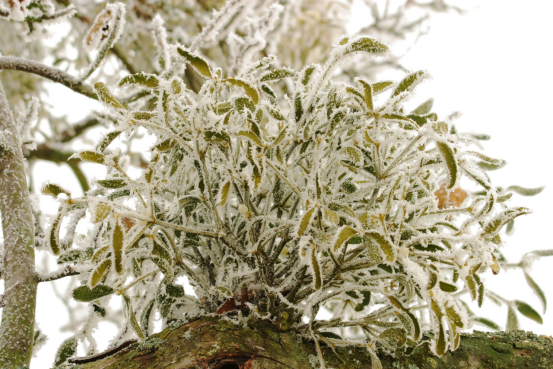
Ecological impact and control: Can it maintain balance?
Although mistletoe plays a unique role in the ecosystem, its expansion is not without cost. After a long period of natural evolution in temperate forests, the overgrowth of mistletoe may have a profound impact on the ecosystem. Its reproduction and spread speed may cause great pressure on trees in the forest, or even death. Shouldn’t such plants be controlled?
Control and management measures:
Physical removal: By cutting off the branches of mistletoe, the burden on the host tree can be effectively reduced. However, can cutting off the branches really stop the spread of mistletoe? Its seed dispersal pathway is so complex, is it enough to rely on physical methods alone?
Ecological balance: Protecting forest diversity and promoting ecological regulation of birds and insects can effectively reduce the spread of mistletoe. However, can such a balance be maintained for a long time, or will it be broken by human intervention?
Chemical control: Some areas use chemicals to control mistletoe growth, but are these methods really harmless? Will they harm other ecological groups in the forest?
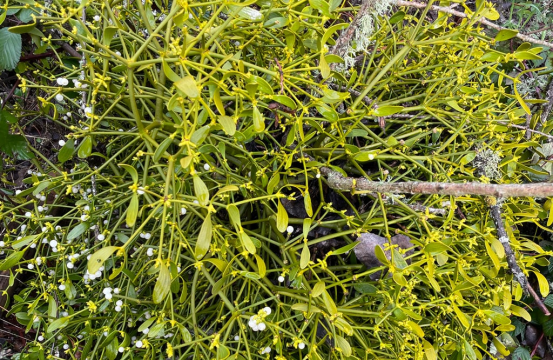
Summary: The Dual Face of Mistletoe
Mistletoe has a complex duality, both from an ecological perspective and from a cultural symbolic level. In temperate forests, it is both a part of the ecosystem and a possible source of ecological imbalance. In human culture, it is endowed with a symbol of romance and warmth, entering everyone’s life with blessings and hope.
Is it a friend or an enemy? Is it a symbol of vitality or a prelude to an ecological disaster? The answer to this question may vary depending on different perspectives, but in any case, mistletoe is destined to play an important role in nature and human society. While it is constantly expanding its own growth space, it is also challenging our wisdom on how to coexist with nature.

Related Posts