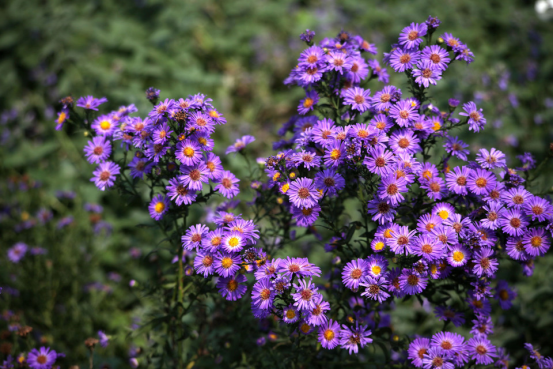
In temperate regions, as the autumn wind blows, the scenery in the forest gradually changes from lush green to colorful golden, orange, and brown. In this ever-changing natural canvas, Aster quietly blooms in the autumn forest with its unique posture and color, becoming a beautiful scenery in the temperate forest. It not only adds a touch of bright color to the autumn landscape, but also plays an important ecological role in this season. The flowers of Aster are like the last fireworks in the forest in late autumn, shining in every corner of the temperate woodland.
Aster’s autumn mission: resilience and elegance of life
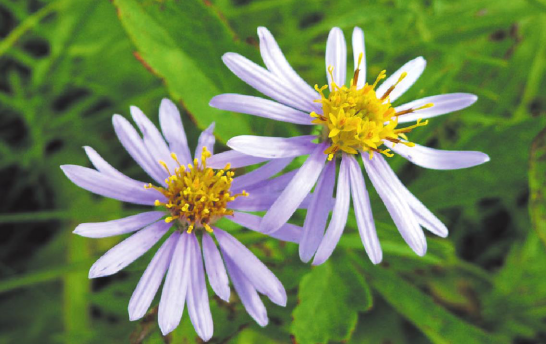
When the cold winds of autumn arrive, most plants have gone dormant, preparing to spend the cold winter. However, asters choose to bloom at the coolest time of the season. Their flowers usually begin to sprout from June to August, and in autumn, their purple, blue or white flowers appear particularly bright and dazzling among the withered yellow leaves. If you walk into a temperate forest and stop for a while, you will definitely see asters swaying gently in the autumn wind. Those small but dense flowers seem to announce to the world: Even in the time when the four seasons change, the power of life can still light up the silent forest.
This seasonal bloom makes Aster a typical autumn plant in temperate forests. When most plants enter a silent period, it attracts the attention of insects through its abundant flowers, continuing the key link in the ecosystem. Aster is not afraid of the change of seasons in temperate regions, but finds the value and meaning of its life at this time.
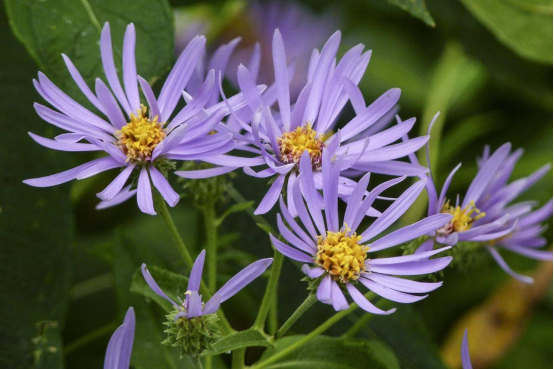
Attraction: the last “feast” of the autumn forest
Autumn is often a season of food scarcity for insects. The flowers of most plants have already withered, and the few nectar resources left have forced insects to look for new sources. And Aster, the protagonist of the autumn “dinner party”, has become the “dinner table” of autumn with its rich nectar. Its purple, blue or white flowers not only attract insects visually, but the nectar in the flowers is also full of nutrients, enough to support insects such as bees and butterflies to survive the coming harsh winter.
In fact, the reason why Aster can become a gathering place for insects in this season is that its nectar content is rich, which can meet the food needs of insects in the last period of autumn. As the insects are busy collecting, Aster naturally completes its mission of pollination and spreads its seeds to more places. In the ecological network of temperate forests, Aster is an indispensable link – it is both a food source for insects and a helper of insect pollination.
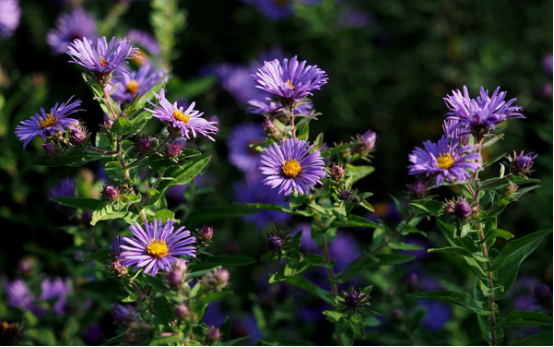
Asters in temperate regions: more than just flowers
In temperate regions, especially those forests with distinct seasons, the life path of Aster is particularly unique. Although the climatic conditions here are changeable, Aster has successfully taken root with its unique adaptability. The temperate forests in this area experience extreme climate changes in spring, summer, autumn and winter, and Aster, a plant that blooms in autumn, can survive and reproduce in such a complex environment. This adaptability makes it not only a part of the forest landscape, but also an important component of the forest ecosystem.
In temperate regions, Aster not only grows in deep forests, its distribution range covers different climatic zones from lowlands to high mountains. Whether it is a humid forest area or a relatively dry grassland, Aster can find a suitable habitat. They usually grow in open places such as the edge of the forest, on hillsides, and even in grasslands and wetlands in temperate regions. The highly adaptable growth characteristics of Aster enable it to find its place in multiple ecological niches in temperate regions.
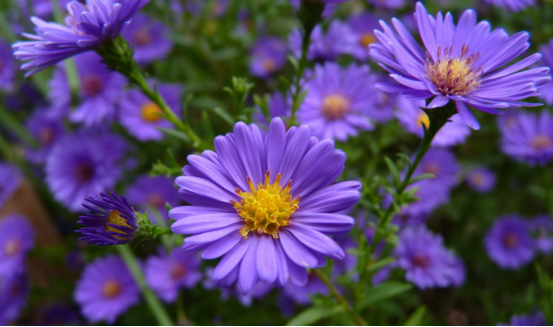
Ecological roles: an interdependent ecological network
The ecological role of Aster in autumn is not limited to providing food for insects, it also plays a unique regulatory role in the plant community. When the flowering period of other plants has ended, Aster still grows tenaciously, providing the last nectar supply for various insects, which makes its ecological role in temperate forests particularly important.
When insects are busy shuttling between the flowers of aster, they unconsciously help aster pollination. The life activities of these insects, in turn, provide a source of energy for other species in the temperate forest. Small animals such as squirrels and rabbits will prey on these insects, further providing the basis of the food chain for higher-level predators such as birds of prey and foxes. The existence of aster is like a small gear, driving the cycle and balance of the forest ecosystem.
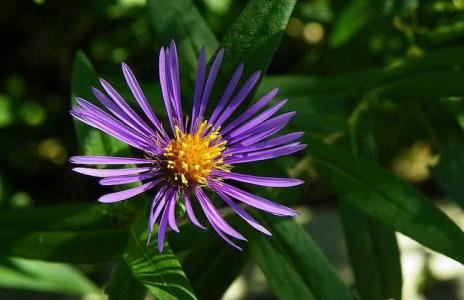
Conclusion: Autumn’s Watcher
The presence of Aster in temperate forests represents the tenacity and vitality of autumn. Its flowers are the last “feast” in the forest in late autumn, providing valuable energy for insects. It is not only a part of the autumn scenery, but also plays an important role in the ecosystem. From the dependence of insects, to the mutual pollination between plants, to the continuation of the ecological chain, Aster is like a watchman in the temperate forest, silently taking on the responsibility of maintaining ecological balance.
Every blooming aster flower is a tribute to life. Its persistence and resilience also make us think that perhaps every flower and leaf in nature is telling a different story of life, and aster, in the autumn of the temperate forest, is quietly writing its own chapter.

Related Posts