The Earth’s oceans are a vast, interconnected system vital for regulating global climate, supporting immense biodiversity, and sustaining human communities. However, this critical life-support system is under severe strain from a multitude of anthropogenic pressures. The challenges are complex and interwoven, ranging from pervasive chemical and plastic pollution to the invisible crisis of underwater noise and the emerging threat of deep-sea resource extraction. Understanding these threats in their full depth is the first step toward implementing effective, long-lasting solutions. This guide delves into the primary dangers facing our marine environments, exploring the scientific mechanisms behind the damage and the global efforts to mitigate them.
The Plastic Plague: A Global Crisis Demanding International Action
Plastic pollution has become one of the most visible and pressing environmental issues of our time. Every year, millions of tons of plastic waste enter the oceans, originating from inadequate waste management, industrial discharge, and consumer products. This debris does not simply disappear; it accumulates in ocean gyres, washes ashore on remote islands, and sinks to the deepest parts of the seafloor, creating a persistent and toxic legacy.
The Scale of Plastic Pollution
The statistics surrounding plastic pollution are staggering. It is estimated that there are trillions of pieces of plastic in our oceans, with the weight projected to surpass that of all fish by 2050 if current trends continue. This pollution is not just an aesthetic problem; it poses a direct physical threat to marine life. Animals such as sea turtles, seabirds, and marine mammals often mistake plastic bags for food or become entangled in discarded fishing gear, leading to injury, starvation, and death. The economic impact is also significant, affecting tourism, fishing, and shipping industries.
From Macro to Micro: The Pervasive Nature of Plastics
While large plastic items, known as macroplastics, are highly visible, the breakdown of these items creates an even more insidious problem: microplastics. These tiny particles, less than five millimeters in size, are ingested by a wide range of marine organisms, from plankton at the base of the food web to large filter feeders like whales. Once ingested, microplastics can cause internal damage and, more alarmingly, introduce toxic chemicals into the food chain. These toxins can bioaccumulate, becoming more concentrated in predators at higher trophic levels, including humans who consume seafood.
The Global Plastics Treaty: A Beacon of Hope
Recognizing the transboundary nature of this crisis, the international community is negotiating a legally binding Global Plastics Treaty. This landmark agreement aims to address the entire lifecycle of plastic, from production and design to waste management and disposal. Key objectives of the treaty negotiations include:
- Reducing plastic production: Setting targets to decrease the manufacturing of virgin plastics, particularly for single-use items.
- Promoting a circular economy: Encouraging the design of products that are reusable, repairable, and recyclable.
- Enhancing waste management: Providing financial and technical support to improve collection and recycling infrastructure globally.
- Ensuring transparency: Mandating reporting on plastic production and trade to hold corporations and countries accountable.
While negotiations are complex, the treaty represents a critical opportunity for a coordinated global response to curb the relentless flow of plastic into our oceans.

The Chain Reaction of Eutrophication: Algal Blooms and Dead Zones
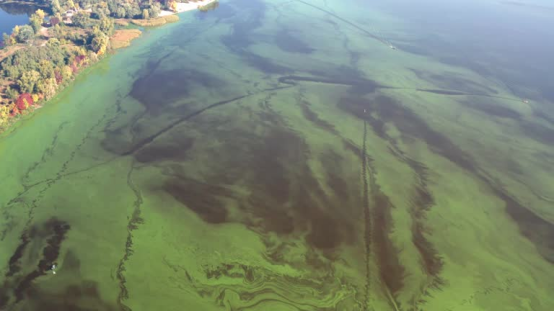
Beyond solid waste, chemical pollution poses a profound threat to marine ecosystems. One of the most destructive forms is nutrient pollution, which triggers a devastating chain reaction known as eutrophication. This process leads to the formation of harmful algal blooms (HABs) and the creation of vast, oxygen-depleted “dead zones” where most marine life cannot survive.
Understanding the Root Cause: Nutrient Runoff
Eutrophication begins on land. The excessive use of nitrogen and phosphorus in agricultural fertilizers, combined with runoff from urban areas and industrial discharge, washes these nutrients into rivers and coastal waters. While these elements are essential for life in small quantities, their overabundance acts as a super-fertilizer for phytoplankton and algae. This influx fuels an explosive, uncontrolled growth of algae, creating massive blooms that can cover hundreds or even thousands of square kilometers of the ocean’s surface.
The Vicious Cycle: From Algal Bloom to Water Hypoxia
The initial bloom is only the beginning of the problem. As the massive quantities of algae die, they sink to the ocean floor and are decomposed by bacteria. This decomposition process consumes vast amounts of dissolved oxygen in the water, leading to a condition known as hypoxia (low oxygen) or anoxia (no oxygen). Mobile organisms like fish may be able to flee the area, but slower-moving or sessile creatures like crabs, oysters, and corals are trapped and suffocate. These hypoxic areas are rightly termed “dead zones” because they can no longer support complex marine life.
Economic and Ecological Collapse: The Impact on Fisheries
The consequences of this chain reaction are catastrophic for both the environment and human communities. Dead zones disrupt entire food webs and destroy critical habitats like seagrass beds and coral reefs. This has a direct and severe impact on coastal economies, particularly the fishing industry. Fishery collapses in areas like the Gulf of Mexico, where a massive dead zone forms annually, result in significant economic losses and threaten the livelihoods of fishing communities that have depended on these waters for generations.

The Unseen Threat: Acoustic Pollution and Its Impact on Marine Life
The ocean is often perceived as a silent world, but it is naturally filled with sounds that marine animals use to navigate, communicate, find food, and reproduce. However, human activities have introduced an overwhelming cacophony of artificial noise, creating an invisible but highly damaging form of pollution. This acoustic smog masks natural cues and can have severe physiological and behavioral effects on marine life, especially cetaceans (whales and dolphins).
Sources of Underwater Noise Pollution
Anthropogenic underwater noise comes from a variety of powerful sources. The most significant contributors include:
- Commercial Shipping: The constant, low-frequency hum from thousands of large vessels creates a pervasive background noise that travels for hundreds of miles.
- Seismic Surveys: Used for oil and gas exploration, these surveys employ powerful airguns that emit deafening blasts every 10-15 seconds, 24 hours a day, for weeks on end.
- Military Sonar: High-intensity active sonar systems used by navies to detect submarines are among the loudest sounds introduced into the ocean.
How Sonar Harms Cetaceans and Other Marine Animals
Cetaceans are particularly vulnerable to noise pollution because they rely on sound as their primary sense. Intense sonar pulses can cause a range of harms, from temporary or permanent hearing loss to tissue damage in the ears and brain. The noise can also trigger severe behavioral changes. Whales may abandon important feeding or breeding grounds, alter their migration routes, or cease vocalizing. In extreme cases, sonar has been directly linked to mass stranding events, where panicked animals surface too quickly, leading to decompression sickness-like injuries, and beach themselves.
Mitigation Strategies and Regulatory Challenges
Addressing acoustic pollution requires a combination of technological innovation and stronger regulation. Potential solutions include designing quieter ship propellers, using alternative technologies for seismic surveys, and restricting the use of high-intensity sonar in biologically sensitive areas. However, implementation is challenging due to the global nature of shipping and the national security interests associated with military activities. Greater international cooperation is needed to establish and enforce meaningful standards for underwater noise levels.

The New Frontier of Exploitation: The Ecological Cost of Deep-Sea Mining
As terrestrial resources become scarcer, industries are turning their attention to the deep sea, a vast and largely unexplored frontier rich in valuable minerals. The prospect of deep-sea mining promises access to metals like cobalt, manganese, and nickel, which are critical for green technologies like electric vehicle batteries. However, scientists warn that this new form of extraction could come at an irreversible ecological cost, devastating some of the most unique and fragile ecosystems on Earth.
The Drive for Seabed Minerals
Three primary types of deep-sea mineral deposits are targeted:
- Polymetallic Nodules: Potato-sized rocks rich in manganese and other metals, found lying on the abyssal plains at depths of 4,000 to 6,000 meters.
- Seafloor Massive Sulfides: Deposits formed around hydrothermal vents, containing high concentrations of copper, gold, and silver.
- Cobalt-Rich Crusts: Mineral layers that form on the flanks of seamounts, rich in cobalt and other metals.
The primary method for extraction involves deploying large, remote-controlled machines to dredge or cut these deposits from the seafloor and pump them as a slurry to a surface vessel.
Irreversible Damage to Unique and Fragile Ecosystems
The deep sea is not a barren wasteland. It is home to a surprising diversity of life, much of which is slow-growing, long-lived, and uniquely adapted to extreme conditions. The direct physical destruction from mining machinery would wipe out these habitats entirely. Furthermore, the process would kick up vast sediment plumes that could drift for miles, smothering organisms and disrupting the chemistry of the water column. The noise and light pollution from 24/7 mining operations would also introduce unprecedented disturbances into this perpetually dark, quiet environment. Because deep-sea ecosystems evolve over geological timescales, scientists believe any damage would be effectively permanent.
The Debate Over a Precautionary Pause
Given the significant scientific uncertainty about the potential impacts, a growing coalition of countries, scientists, and environmental organizations is calling for a moratorium or precautionary pause on commercial deep-sea mining. They argue that no mining should proceed until comprehensive scientific research has been conducted, the environmental risks are fully understood, and robust regulations are in place to protect the marine environment. The International Seabed Authority (ISA) is the body responsible for regulating this industry, and the debate within it highlights the conflict between economic interests and environmental protection.

A Call to Action: Protecting Our Oceans Through Collective Effort
The overwhelming scale of the threats facing our oceans demands a response of equal magnitude. Effective ocean conservation requires a multi-pronged approach that combines high-level international governance, dedicated national policies, and grassroots action at the community level. Protecting the oceans is not just about saving wildlife; it is about protecting the foundation of human well-being and the stability of our planet.
The Power of Community-Led Conservation
Coastal communities, especially indigenous groups, are often on the front lines of ocean change and possess invaluable traditional ecological knowledge. Empowering these communities to manage their local marine resources is one of the most effective conservation strategies. Locally managed marine areas (LMMAs) and community-based conservation initiatives can lead to more sustainable fishing practices, better protection of critical habitats like mangroves and coral reefs, and a stronger sense of local stewardship. Protecting the ocean directly translates to protecting the livelihoods, food security, and cultural heritage of these communities.
Policy and Governance: The Role of International Law
Global challenges require global solutions. International legal frameworks like the UN Convention on the Law of the Sea (UNCLOS) provide the foundation for ocean governance. New and emerging agreements, such as the Global Plastics Treaty and the High Seas Treaty (for protecting biodiversity beyond national jurisdiction), are crucial steps forward. These treaties facilitate international cooperation, establish shared responsibilities, and create mechanisms for holding nations accountable for their environmental commitments.
Individual Responsibility in Creating a Trash-Free Ocean
While policy and large-scale action are essential, individual choices collectively contribute to the problem and the solution. Fighting for a trash-free ocean begins with reducing personal consumption, particularly of single-use plastics. Supporting businesses with sustainable practices, participating in local clean-up events, and advocating for stronger environmental policies in one’s own community are all powerful ways to contribute. A cultural shift towards viewing our oceans as a shared, finite resource to be protected, rather than a limitless dumping ground, is fundamental to securing their future.
Frequently Asked Questions (FAQ)
- What is the single biggest threat to ocean health?
- It is difficult to name a single “biggest” threat, as many are interconnected. However, the multifaceted impacts of climate change (including ocean warming, acidification, and deoxygenation) act as a threat multiplier, worsening the effects of other stressors like pollution and overfishing. Plastic pollution is the most visible threat, while deep-sea mining represents a significant emerging danger.
- How does sonar pollution actually harm whales?
- High-intensity sonar can cause severe physical and behavioral harm to whales. Physically, it can cause permanent hearing damage and lead to a condition similar to decompression sickness if the animal surfaces too quickly in a panic. Behaviorally, it disrupts their ability to communicate, navigate, and find food. This can lead to them abandoning critical habitats and has been directly linked to mass stranding events.
- Why is deep-sea mining considered so dangerous?
- Deep-sea mining is dangerous because it targets ecosystems that are extremely fragile, slow to recover, and poorly understood. The process would cause direct habitat destruction, create vast sediment plumes that can smother life far from the mining site, and introduce noise and light pollution. Scientists warn that the biodiversity loss could be irreversible on human timescales, and the full ecological consequences are unknown.
- Can a global plastics treaty really solve the plastic problem?
- A global plastics treaty is not a silver bullet, but it is a critical and necessary step. A strong, legally binding treaty can create a global framework for action by setting targets for reducing plastic production, harmonizing regulations, promoting a circular economy, and providing financial support for better waste management in developing nations. It creates a system of global accountability that is essential for tackling a problem that crosses all borders.
- What can individuals do to help protect the oceans?
- Individuals can make a significant impact through collective action. Key steps include: reducing consumption of single-use plastics, making sustainable seafood choices, conserving water to reduce runoff, properly disposing of all waste, participating in or organizing local clean-ups, and advocating for stronger environmental protections by contacting elected officials and supporting conservation organizations.

Related Posts