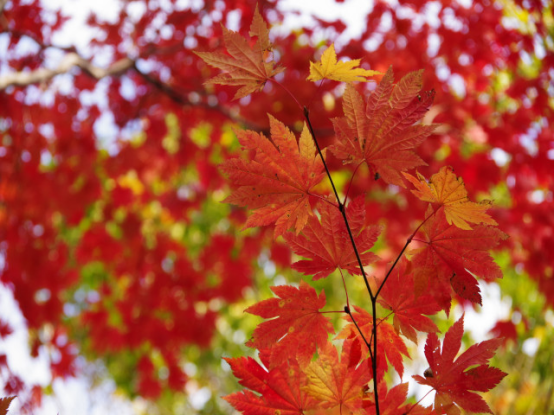
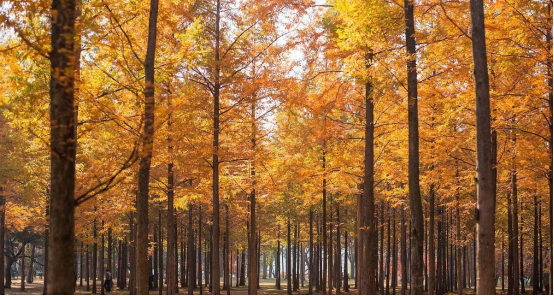
Have you ever stopped under a maple tree when the autumn wind blows, looking up at the colorful maple leaves burning like fire? Each maple leaf tells the secret of the season, as if it is a magician of nature. Every year, when autumn quietly comes, they dye the surrounding world with a layer of warm colors like magic, and red, orange and yellow interweave into beautiful landscapes. Do you sigh, how can autumn be so beautiful?
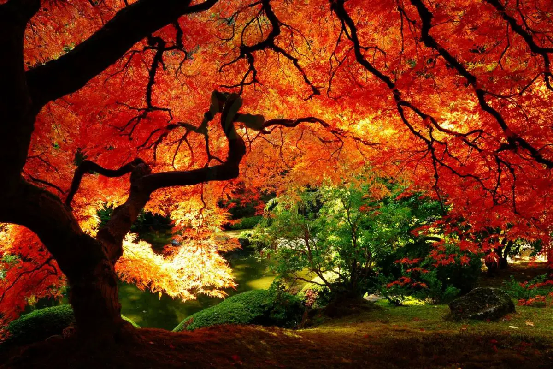
The magical transformation of the maple tree
Maple trees, a common giant in the forest, change into the most stunning colors every autumn. How does this happen? As the seasons change, the leaves of maple trees are no longer that refreshing green, but slowly fade under the influence of temperature, becoming fiery and vivid. The red leaves of sugar maples are particularly bright, and red maples are one of the first trees to change color. Whenever their leaves turn red, people can’t help but think of the arrival of autumn.
At this time, the maple tree is like a bright color on the palette of nature, making people stop and want to capture the beauty of the moment with their eyes. But why is the maple tree so special? Why is its autumn color always so eye-catching?
The vitality of maple trees: tenacious existence
Maple trees are tenacious and full of vitality. Their vitality seems to be as strong as the colors of autumn. When you see its upright body and lush green leaves on its branches, you can’t help but feel awe. Have you ever wondered how long maple trees can live? Yes, their lifespan can reach 300 years! Even between the high-rise buildings in modern cities, maple trees still show their strong vitality.
If there is no external interference, maple trees can grow rapidly at a speed of 3 to 4 meters per year. Can you imagine how many storms and years a tree has gone through from a seed to such a huge existence? This makes people sigh, the tenacious vitality and tenacious character of maple trees, does it also make us feel a certain philosophy of life – growing in the wind and rain, and never giving up?
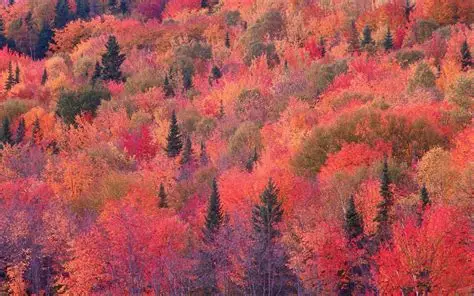
Autumn colors of maple trees: a symphony of colors
When it comes to autumn colors, you will definitely think of maple leaves. Every year, when autumn comes quietly, maple leaves begin to fade from green and gradually turn into a mixture of red, orange, and yellow. What is going on with this color change? It all comes from changes in temperature. In the cold autumn, the chlorophyll of the maple tree gradually decomposes, and other pigments in the leaves begin to appear – yellow carotenoids and red anthocyanins, bringing us a colorful scene.
So, do different varieties of maple trees have the same autumn colors? Of course not! The red color of the sugar maple (Acer saccharum) is particularly bright, as if it represents autumn, and reminds people of autumn in New England. The red maple (Acer rubrum) is one of the first trees to change color, and it often brings us a hint of autumn before autumn arrives. Do you also want to have such a charming maple tree?
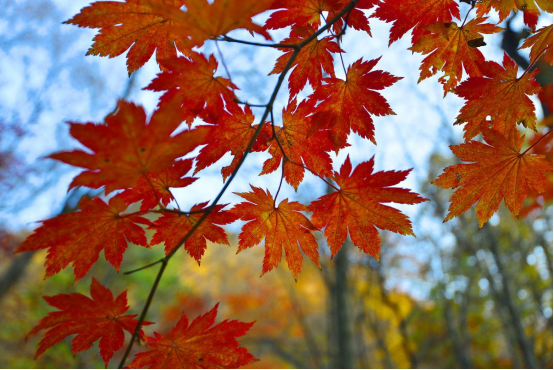
Classic Varieties: Make Your Garden Bloom in Fall
Sugar Maple (Acer saccharum)
Colors: Bright red, orange, and yellow, just imagining the interweaving of these colors is exciting.
Why it’s popular: The red color of sugar maple is the epitome of fall, especially in cool climates, where the leaves are particularly bright. Its wide canopy and brilliant colors make each sugar maple a focal point in the garden.
Landscaping Tip: If you want to bring a touch of bright color to your garden in the fall, sugar maple is undoubtedly a perfect choice. Its large canopy can provide shade in the summer and add a colorful color to your yard in the fall.
Red maple (Acer rubrum)
Color: Mainly red, occasionally interspersed with orange and yellow, with rich color changes.
Why it is popular: As the “prophet” of autumn, red maple is always one of the first trees to change color. When red maple begins to turn red, autumn is approaching quietly.
Landscaping tips: Red maple is highly adaptable and can grow in a variety of soil conditions. It is very suitable for placing on the edge of the garden or as an independent ornamental tree to add rich autumn colors.
Japanese maple (Acer palmatum)
Colors: Bright red, purple, orange, yellow, the variety of color changes is dazzling.
Why it’s popular: Japanese maple is known for its delicate leaf shape and elegant posture, which is perfect for small gardens or ornamental courtyards. Its leaves are not only colorful, but also uniquely shaped.
Landscaping tips: It is very suitable for matching Asian-style gardens or as an understory plant. You can plant ferns around it to create a layered landscape.
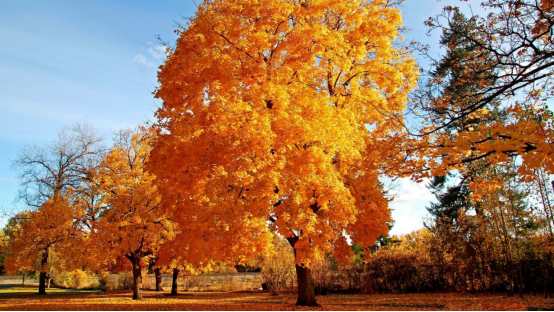
Maple tree cultivation and environmental requirements: making them grow better
So, how can you make maple trees thrive in your garden? First of all, maple trees have certain requirements for soil. They are best grown in fertile, loose, well-drained soil, especially neutral or slightly acidic soil. If you are in a humid temperate climate, then maple trees will adapt very well.
Secondly, maple trees have moderate water requirements. They do not need a lot of water like coconut trees, but during the growing season, it is especially important to ensure adequate water. Maple trees also have high light requirements. They prefer full sunlight, especially in the early growth stages.
Conclusion: Spend a wonderful autumn with maple trees
The beauty of maple trees is the most moving part of autumn. Their fiery red leaves, bright colors, and tenacious vitality seem to remind us that we can find our own colors and strength in any season. Every falling maple leaf is a gift brought to us by autumn. Let us celebrate the beauty of this season together.

Related Posts