There are many amazing plants in the world that thrive, adapt and prosper in specific environments. But among them, pine trees, as representatives of evergreen trees, show the wisdom given to them by nature with their extraordinary adaptability and vitality. Have you ever wondered why pine trees can survive in cold, drought and disaster-prone environments? How do they stand out?
As an important part of the global coniferous forest, pine trees have demonstrated their tenacity and extraordinary adaptability. Their existence has not only changed the appearance of the forest, but also provided us with endless thoughts and inspirations.
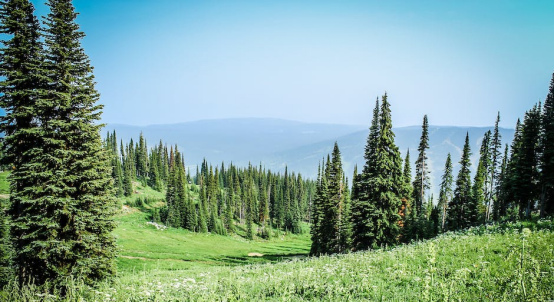
Coniferous forest: a resilient ecological barrier
Coniferous forests, especially pine trees, grow in cold regions all over the world. Imagine that near the Arctic, on those snow-covered lands, life seems extremely small and can’t even withstand such a harsh climate. But pine trees can take root and grow in these places. Their roots penetrate deep into the cold soil, firmly connecting themselves to the earth. This tenacious vitality is amazing.
Pine trees usually live in areas with long winters and short summers, mainly in the Northern Hemisphere. You can find them in forests in Canada, Russia, Northern Europe, and even on the plateaus of the Himalayas. Despite the cold temperatures and poor soil in these places, pine trees still grow tenaciously and are full of vitality.
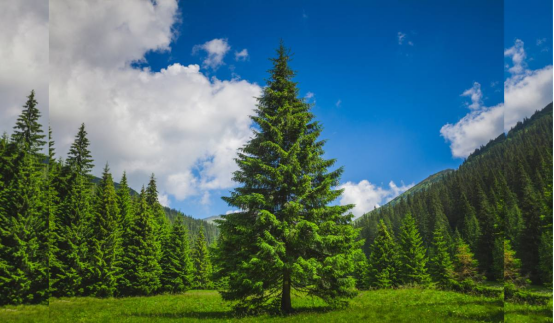
Physiological adaptations of pine trees: How do they survive in extreme environments?
Pine trees are able to survive in such a harsh environment thanks to their many unique physiological characteristics. First, the needle structure of pine trees is one of the keys to their adaptation to cold climates. Unlike deciduous trees, pine leaves are slender and needle-shaped. This unique leaf structure not only reduces water evaporation, but also better resists strong winds in cold weather.
Moreover, the surface of pine leaves is covered with a waxy protective film, which effectively prevents water loss. Even in the coldest winter, they can retain enough water to maintain life activities. And these needles do not fall all year round, which means that they can photosynthesize all year round and make full use of the limited sunlight.
Even better, the pine tree’s roots are extremely frost-resistant and can penetrate deep underground in cold environments to obtain water and nutrients, which allows the pine tree to continue to grow even when it is covered in snow and the ground is frozen.
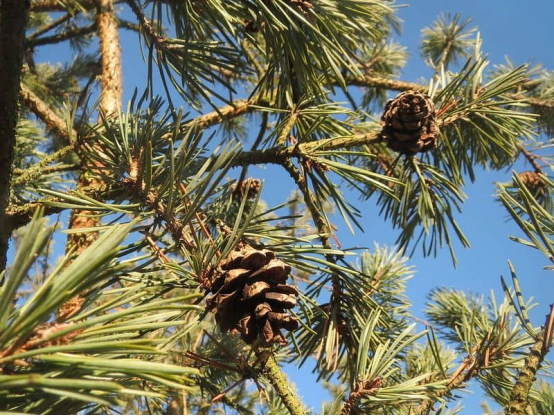
Friends of fire: How pine trees recover from disaster
Perhaps you would not have thought that pine trees are actually “friends” of fire. They are not afraid of fire, on the contrary, fire even provides an opportunity for their growth. Think about it, when a forest fire rages, many plants will quickly disappear under the threat of flames. But the seeds of pine trees will be “explosively” released only under high temperatures.
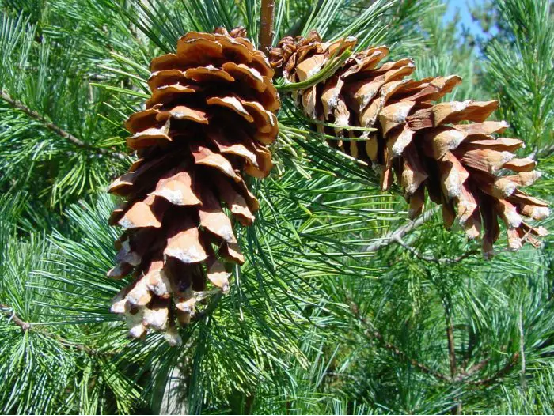
The pine cones of pine trees have a unique structure, their scales are tightly closed, and only under the high temperature of the fire can these pine cones open and release seeds. This unique reproductive method allows pine trees to quickly resume growth after a fire. More interestingly, after a fire, the ashes provide a large amount of minerals and nutrients to the soil, and pine seeds germinate quickly and can even find new growth space in a scorched earth.
This adaptability was developed by pine trees during a long evolutionary process, allowing them not only to survive fires, but also to take the opportunity to re-establish forests on post-fire land and ensure their own ecological position.
Comparison between pine trees and deciduous trees: Why are pine trees evergreen all year round?
Compared to deciduous trees, pine trees grow in a more resilient and tenacious way. Deciduous trees shed their leaves in the fall and winter to reduce water loss. But pine needles remain green until spring. Why is this?
Pine trees choose the strategy of “evergreen” because their needles can better adapt to cold environments. Their needle-shaped leaves have a small surface area and a hard texture, which greatly slows down the evaporation of water. In addition, the waxy coating on the surface of pine leaves can effectively lock in moisture and reduce water loss. It can be said that the “evergreen” of pine trees is an important magic weapon for them to survive in the environment.
Sociality in pine trees: How to dominate competition?
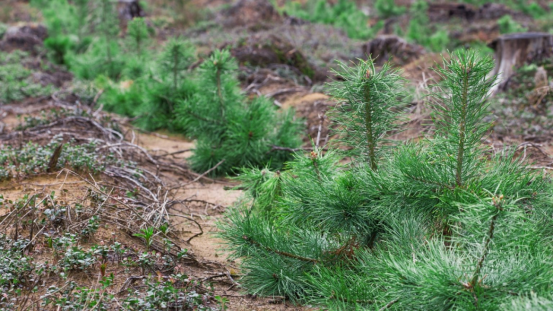
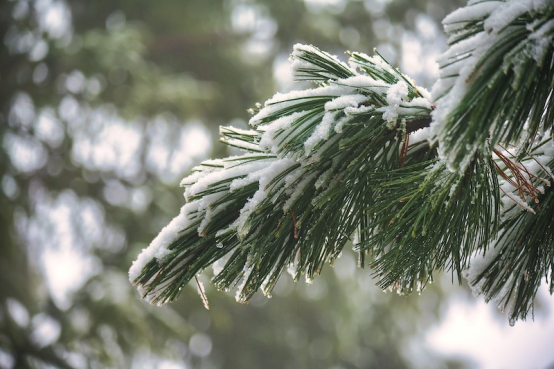
Pine trees don’t just grow in harsh environments, they somehow “control” the entire forest ecosystem. The branches of pine trees are soft and flexible, and when snow accumulates, the branches of pine trees automatically bend, allowing the snow to slide off the branches, avoiding the branches being broken due to excessive snow.
Pine trees are also uniquely “social” and they release large quantities of seeds to ensure their position in the forest. In some pine species, pine cones only open and release seeds in the heat of a forest fire. This strategy seems to be a “insurance policy” of nature: only in a natural disaster such as a fire can their seeds escape danger and quickly take root and sprout.
Conclusion: The tenacity and wisdom of pine trees
The adaptability of pine trees is not only the “secret” to their survival, but also a manifestation of vitality. Through their unique physiological structure, adaptation to fire, and strategy of evergreen, they demonstrate the tenacious vitality given to them by nature. Pine trees do not simply “conform” to the environment, but find the wisdom of survival through continuous adaptation and change.
They teach us that we can find our own way to survive in any difficult environment. Perhaps the pine tree’s perseverance is the best example for us to follow in the face of challenges.

Related Posts